
Eye Tracking Technology
Companies are now global, leading to potential communication challenges due to dialects and terminologies. Speech transcription support can enhance transparency and improve customer experiences by accurately recording conversations.
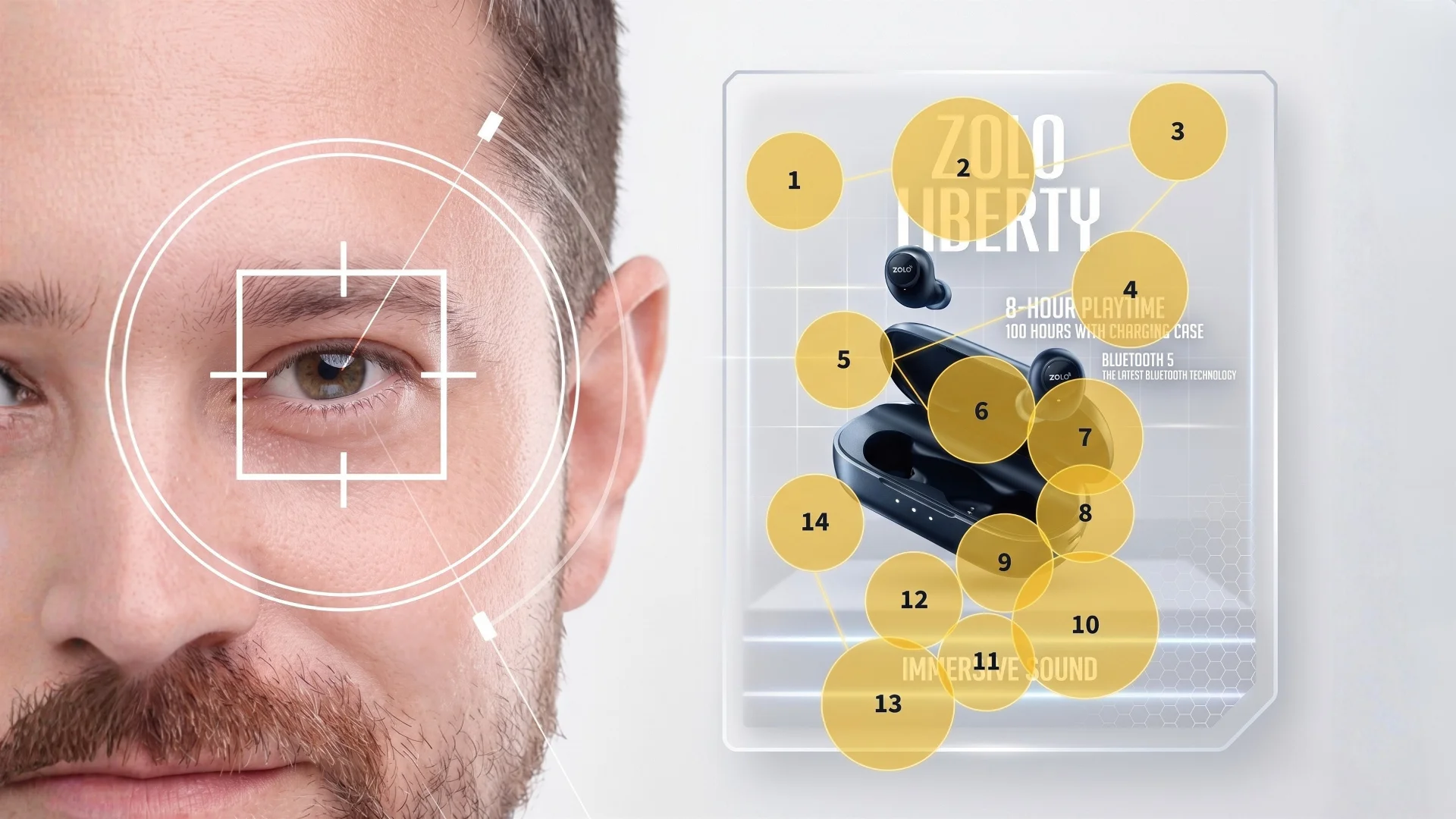
What is Eye Tracking?
Understanding the underlying emotions becomes increasingly important as marketers attempt to learn more about user preferences. Naturally, monitoring nonverbal clues in real time, such eye movement, may assist firms in understanding how their goods really affect consumers.
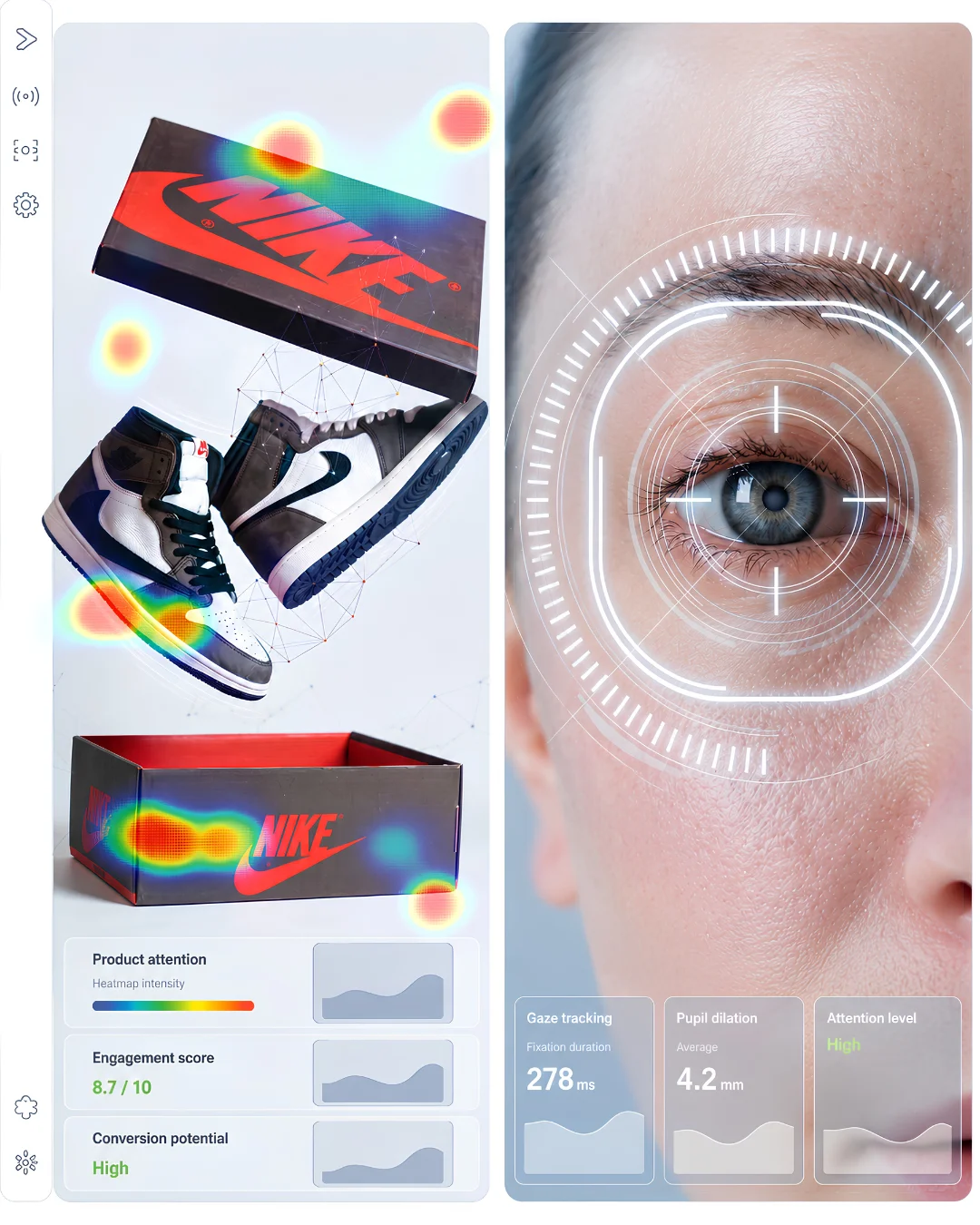
Brands may obtain a wealth of information on how consumers see their products by using eye movement sensors to identify users’ presence and what they are looking at in real-time. In order to assist businesses in mapping user sentiments toward their offers, it takes into account a number of factors, including pupil position, gaze point, and gaze vector of the eyes. As a result, advertisers may create ads that are more appealing to consumers and encourage them to buy more quickly.
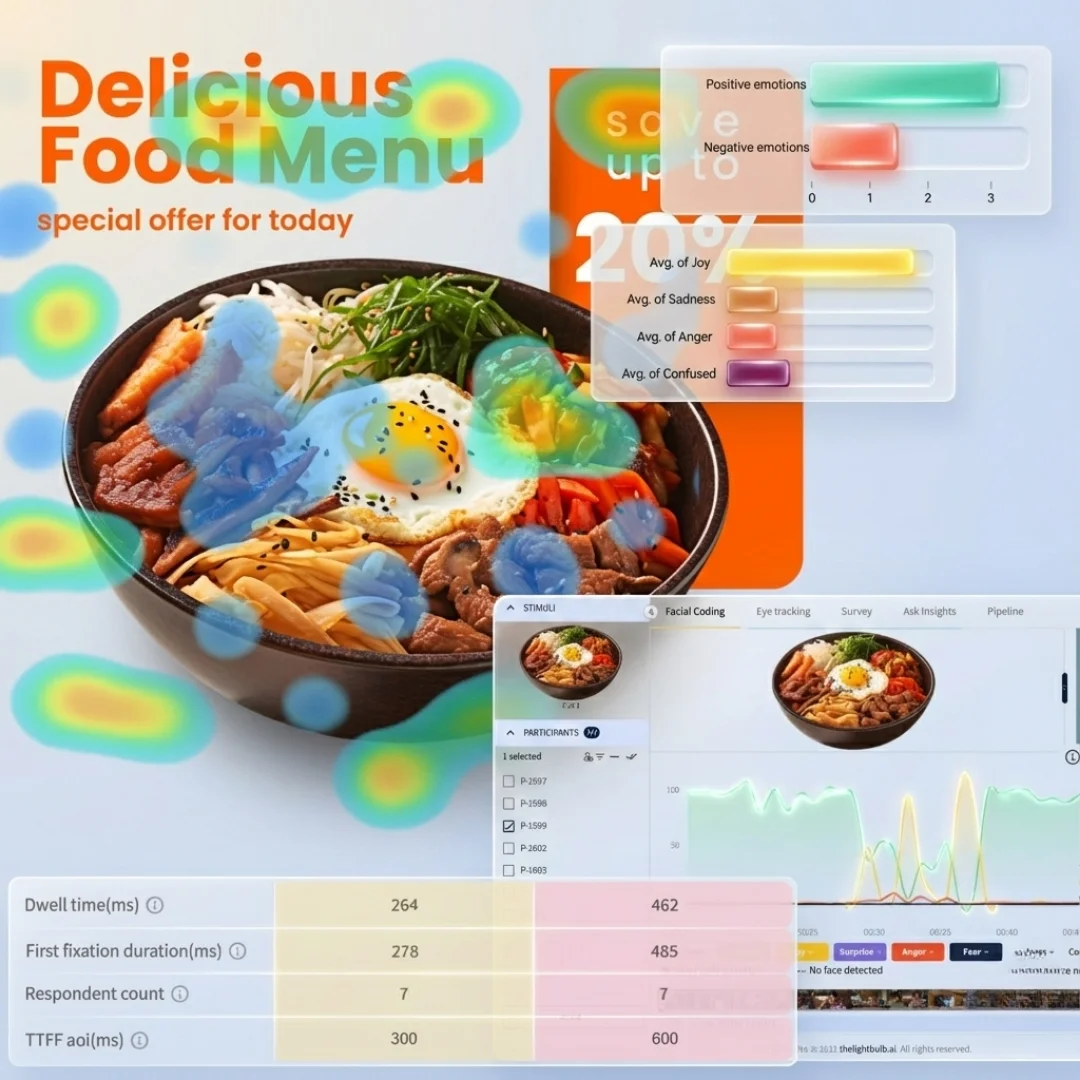
Types of eye tracking
Core Eye-Tracking Technologies
Eye tracking is a non-intrusive behavioral research technology used to measure visual attention and gaze patterns. Different techniques are used depending on the research environment, required accuracy, and participant interaction. Each method captures eye movement in a different way but ultimately aims to understand where people look, how long they focus, and how their visual attention changes during an experience.
Attached Eye Tracking
This method uses specialized devices positioned directly around the eye, such as contact lenses or wearable sensors. By staying close to the eye, the system captures highly precise eye movement data. Attached tracking is commonly used in scientific research environments where extreme accuracy is required for analyzing subtle eye movements.
• SCIENTIFIC RESEARCH ENVIRONMENTS REQUIRING EXTREME ACCURACY
Electric Potential Tracking
Electric potential tracking measures eye movements by detecting electrical signals generated by the muscles surrounding the eyes. Small electrodes are placed around the eye area to capture these signals, which are then analyzed to determine gaze direction and movement patterns. This method is often used in neuroscience and physiological studies.
• NEUROSCIENCE AND PHYSIOLOGICAL STUDIES
Attached Eye Tracking
This method uses specialized devices positioned directly around the eye, such as contact lenses or wearable sensors. By staying close to the eye, the system captures highly precise eye movement data. Attached tracking is commonly used in scientific research environments where extreme accuracy is required for analyzing subtle eye movements.
• SCIENTIFIC RESEARCH ENVIRONMENTS REQUIRING EXTREME ACCURACY
Electric Potential Tracking
Electric potential tracking measures eye movements by detecting electrical signals generated by the muscles surrounding the eyes. Small electrodes are placed around the eye area to capture these signals, which are then analyzed to determine gaze direction and movement patterns. This method is often used in neuroscience and physiological studies.
• NEUROSCIENCE AND PHYSIOLOGICAL STUDIES
Optical Eye Tracking
Optical tracking is the most widely used eye-tracking method today. It uses cameras and reflected infrared light to identify the pupil center and corneal reflection. By analyzing these reflections, the system calculates the exact gaze direction and tracks eye movement continuously. This approach is commonly used in UX research, marketing studies, gaming, and digital interaction analysis.
• UX RESEARCH, MARKETING, GAMING & DIGITAL INTERACTION
Top industries using Eye Teacking Technology
Sports
Eye tracking improves performance analysis by linking visual attention with actions and decision-making. It helps compare expert and novice athletes through gaze patterns. This data enables better training programs, faster reactions, and improved coordination, leading to enhanced performance and reduced injury risks.
Virtual Reality
Eye tracking enhances virtual reality by enabling realistic and responsive interactions. It allows avatars to mimic eye movements like blinking and gaze direction. This improves immersion, user experience, and emotional expression, making VR environments more engaging and lifelike.
Simulation
Eye tracking is widely used in simulation, especially in automotive research, to study visual attention and responses. It helps analyze interaction with dashboards and navigation systems. These insights improve design, safety, and usability, giving companies a competitive edge in product development.
Medical Research
Eye tracking technology helps diagnose conditions like ADHD, ASD, schizophrenia, Parkinson’s, and Alzheimer’s. By analyzing eye movements and gaze patterns, it reveals insights into cognitive behavior. Widely used in neuroscience and psychology, it supports early diagnosis, health monitoring, and accurate assessment of neurological and mental disorders.
Gaming Research
Eye tracking enhances gaming research by analyzing player attention, focus, and interactions in real time. It helps developers understand user behavior and optimize game design. By studying gaze patterns, it improves engagement, navigation, and overall experience, enabling more immersive and personalized gameplay.
Key Highlights of Our
Eye Tracking Technology
-
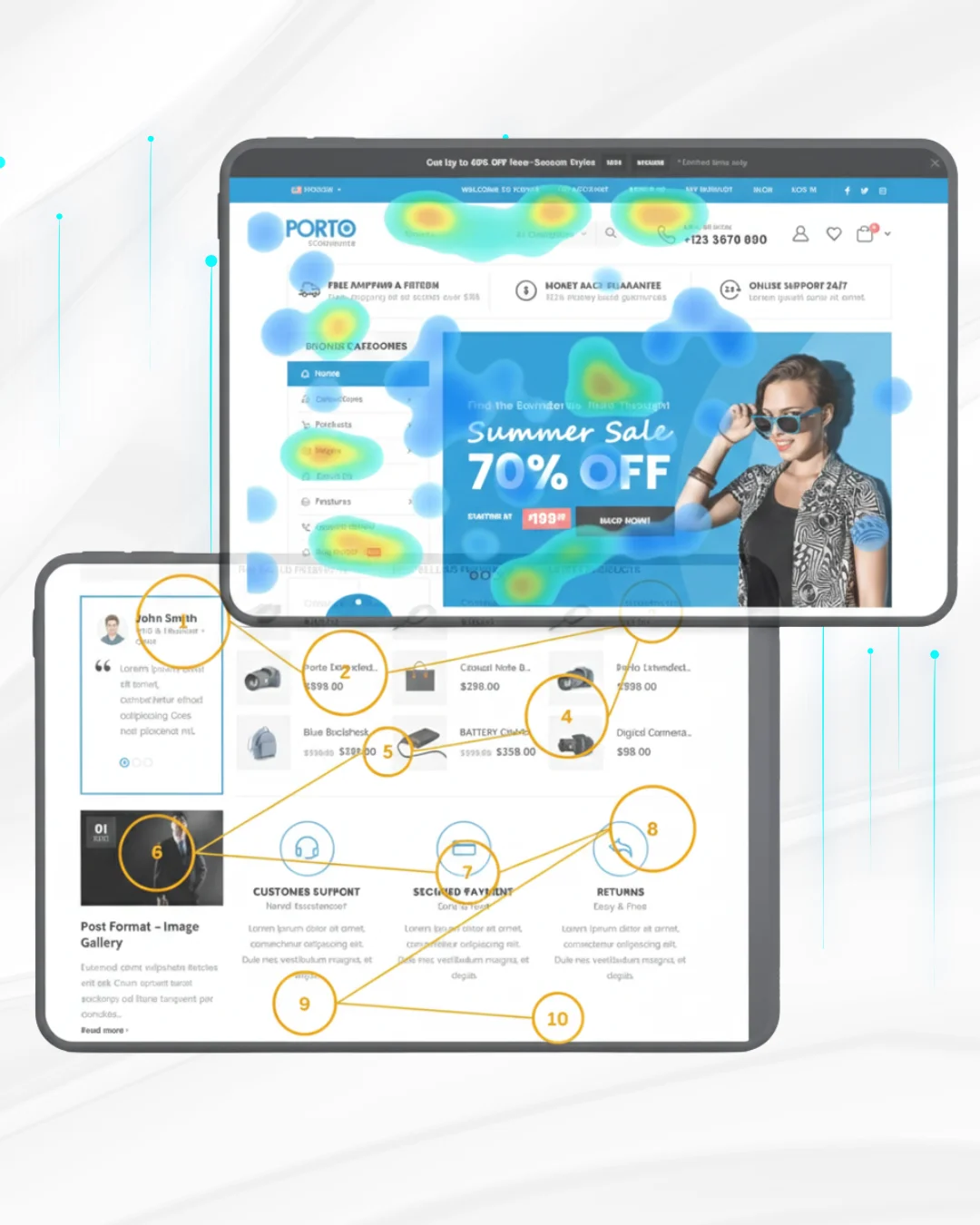
Real-Time Gaze Intelligence Our AI-powered eye tracking captures precise gaze patterns in milliseconds, revealing exactly where users look, what captures attention, and how visual content influences behavior.
-
Advanced Infrared Eye Detection Using near-infrared illumination and pupil-corneal reflection (PCCR) technology, our system accurately detects eye position and movement even under complex lighting conditions.
-
High-Precision Research Mode Head-stabilized tracking eliminates motion noise and ensures ultra-precise gaze measurement, making it ideal for neuroscience, cognitive research, and high-fidelity behavioral studies.
-
Seamless Remote Eye Tracking Track eye movements without physical contact. Remote eye tracking enables natural user interactions while cameras capture detailed gaze data during screen-based studies.
-
AI Head-Movement Compensation Intelligent algorithms dynamically adjust for head movement, ensuring continuous and accurate gaze tracking even during natural user behaviour.
-
Mobile & Wearable Eye Tracking Head-mounted eye-tracking devices capture real-world visual behavior in environments such as retail stores, driving simulations, sports training, and usability testing.
-
Actionable Behavioral Analytics Transform gaze data into powerful insights with advanced analytics that reveal attention patterns, usability challenges, and decision-making triggers.
-
Embedded Smart Device Integration Eye tracking can be integrated into VR/AR headsets, automotive dashboards, medical devices, and consumer electronics for immersive and intuitive human-machine interaction.
Key Highlights of Our
Eye Tracking Technology
-
Real-Time Gaze Intelligence Our AI-powered eye tracking captures precise gaze patterns in milliseconds, revealing exactly where users look, what captures attention, and how visual content influences behavior.
-
Advanced Infrared Eye Detection Using near-infrared illumination and pupil-corneal reflection (PCCR) technology, our system accurately detects eye position and movement even under complex lighting conditions.
-
High-Precision Research Mode Head-stabilized tracking eliminates motion noise and ensures ultra-precise gaze measurement, making it ideal for neuroscience, cognitive research, and high-fidelity behavioral studies.
-
Seamless Remote Eye Tracking Track eye movements without physical contact. Remote eye tracking enables natural user interactions while cameras capture detailed gaze data during screen-based studies.
-
AI Head-Movement Compensation Intelligent algorithms dynamically adjust for head movement, ensuring continuous and accurate gaze tracking even during natural user behaviour.
-
Mobile & Wearable Eye Tracking Head-mounted eye-tracking devices capture real-world visual behavior in environments such as retail stores, driving simulations, sports training, and usability testing.
-
Actionable Behavioral Analytics Transform gaze data into powerful insights with advanced analytics that reveal attention patterns, usability challenges, and decision-making triggers.
-
Embedded Smart Device Integration Eye tracking can be integrated into VR/AR headsets, automotive dashboards, medical devices, and consumer electronics for immersive and intuitive human-machine interaction.
What You Can Do with Eye Traking Technology
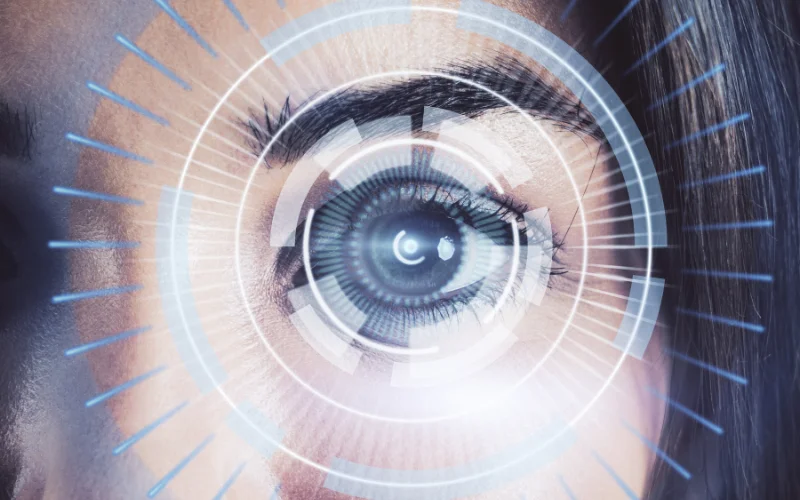
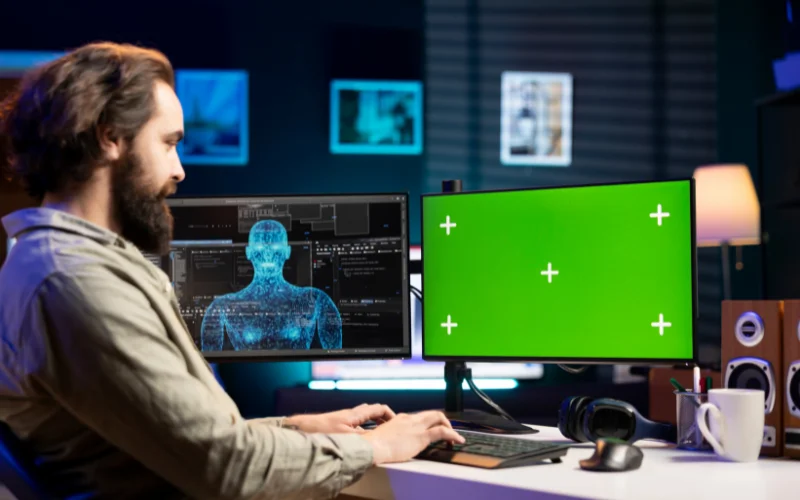
Understand visual attention, gaze behavior, and decision patterns through AI-powered eye tracking insights.
Visual Attention Mapping
Track exactly where users focus their attention on screens, products, or visual interfaces in real time.

Gaze Pattern Analysis
Analyze eye movement patterns to understand how users explore content and process visual information.
Fixation & Revisit Tracking
Measure fixation points and repeated gaze visits to identify elements that attract or retain user attention.
Visual Attention Mapping
Track exactly where users focus their attention on screens, products, or visual interfaces in real time.
Gaze Pattern Analysis
Analyze eye movement patterns to understand how users explore content and process visual information.
Fixation & Revisit Tracking
Measure fixation points and repeated gaze visits to identify elements that attract or retain user attention.

Cognitive Behavior Insights
Reveal how attention, perception, and decision-making are connected during tasks like reading, gaming, or browsing.
Customer Interaction Intelligence
Study how users visually interact with digital interfaces, helping improve design, usability, and navigation.

Data-Driven Attention Metrics
Convert gaze coordinates and eye movement data into actionable metrics for behavioral research and UX optimization.
Customer Interaction Intelligence
Reveal how attention, perception, and decision-making are connected during tasks like reading, gaming, or browsing.
Cognitive Behavior Insights
Study how users visually interact with digital interfaces, helping improve design, usability, and navigation.
Data-Driven Attention Metrics
Convert gaze coordinates and eye movement data into actionable metrics for behavioral research and UX optimization.
Understanding the Difference
Eye Tracking vs. Gaze Tracking
Eye tracking and gaze tracking are often used interchangeably, but they serve different purposes and are applied in different technological contexts. While both analyze eye movements and visual attention, the objective, data interpretation, and application areas differ significantly.

Eye Tracking
Focuses on analyzing eye movements to understand human behavior, cognition, and visual attention. Used in research environments where understanding how people observe and interact with visual content is essential.
Systems record gaze duration, fixation points, head movements, and eye movement patterns — helping researchers analyze attention, perception, and decision-making processes.
Applications
- Scientific research & psychology
- Usability testing & UX research
- Medical & neurological studies
- Market research & advertising
Gaze Tracking
Focused on communication and interaction technology. Instead of studying behavior, it determines where a person is looking so systems can respond accordingly.
By detecting a user’s gaze direction, systems enable hands-free interaction, menu navigation, or control of digital interfaces — making it inherently interaction-driven.
Applications
- Assistive communication systems
- Augmented & virtual reality
- Interactive device control
- Hands-free digital navigation
Eye Tracking
Focuses on analyzing eye movements to understand human behavior, cognition, and visual attention. Used in research environments where understanding how people observe and interact with visual content is essential.
Systems record gaze duration, fixation points, head movements, and eye movement patterns — helping researchers analyze attention, perception, and decision-making processes.
Applications
- Scientific research & psychology
- Usability testing & UX research
- Medical & neurological studies
- Market research & advertising
Gaze Tracking
Focused on communication and interaction technology. Instead of studying behavior, it determines where a person is looking so systems can respond accordingly.
By detecting a user’s gaze direction, systems enable hands-free interaction, menu navigation, or control of digital interfaces — making it inherently interaction-driven.
Applications
- Assistive communication systems
- Augmented & virtual reality
- Interactive device control
- Hands-free digital navigation
Key Difference
Research & Analysis ↔
Interaction & Communication
Research & Analysis ↔ Interaction & Communication
The main difference lies in purpose and application:
Eye Tracking is primarily used for behavioral research and analysis.
Gaze Tracking is designed for interaction and communication with technology.
However, both technologies rely on analyzing eye movement patterns and gaze behavior to generate meaningful insights or enable responsive systems.
How Eye Tracking Data Is Interpreted
These insights are then processed through advanced analytics to generate accurate behavioral data that helps researchers and organizations understand visual attention, decision-making, and user interaction patterns.
Regardless of the technique used, eye tracking systems analyze several core visual behaviours:
- Gaze Movement – tracks how eyes move between objects or areas.
- Head Movement Interaction – analyzes how gaze changes during head turns or tilts.
- Attention Speed – calculates how quickly the eye shifts focus between elements.
- Focus Point Detection – identifies exactly where a user is looking.
The "Look-But-Fail-To-See" Phenomenon: Beyond the Heatmap
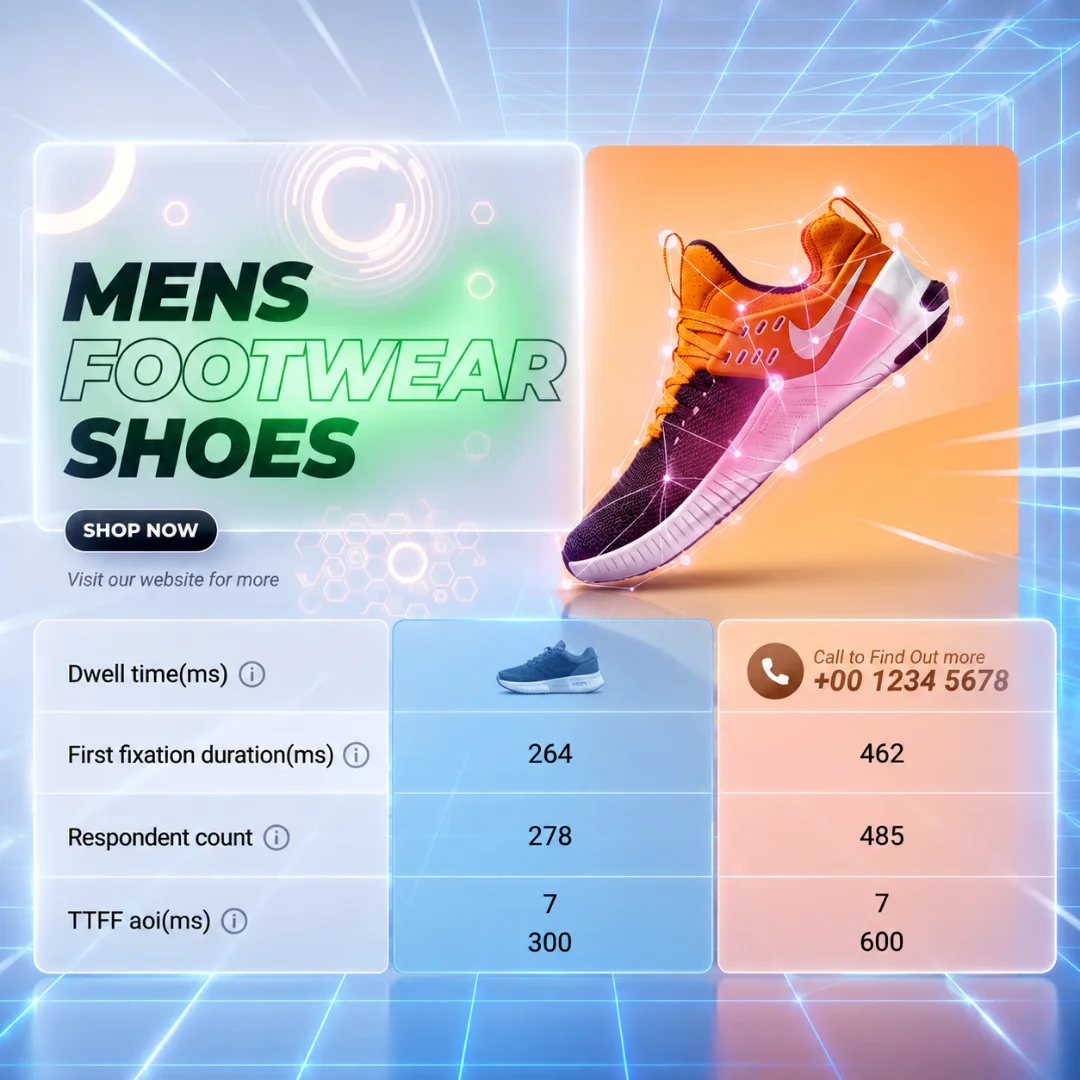
Data visualization tools like heatmaps are excellent for showing spatial attention, but they often mask a psychological blind spot known as inattentional blindness. Just because a participant’s foveal vision (the center of their gaze) rests on an object doesn’t mean their brain is processing it.
Decoding "Quiet Eye" vs. "Empty Gaze"
In research, a long fixation count is usually interpreted as high interest or cognitive processing. However, it can also represent “zoning out.” * The Fixation Trap: A 500ms fixation on a “Buy Now” button could mean the user is considering the purchase, or it could mean they are confused by the layout and are stuck in a cognitive loop.
-
The Solution:
Use Scanpath Theory to analyze the sequence of fixations. A logical, linear path suggests purposeful navigation, while a chaotic, "bouncing" path often indicates frustration or visual noise.

The Peripheral Power Play
Current eye-tracking tech focuses almost exclusively on foveal vision (the 1-2 degrees of sharpest focus). However, peripheral vision dictates where the eye moves next.
- If a banner ad is flickering in the periphery, the participant may consciously avoid looking at it (a phenomenon called banner blindness).
- Even if the heatmap shows "zero" hits on that ad, the ad still impacted the user’s experience by creating cognitive load or annoyance.
Triangulating Human Intent
To turn raw coordinates into actionable insights, researchers are increasingly using Multimodal Biometrics. Since eye tracking alone can’t distinguish between “I love this” and “I hate this,” combining it with other sensors provides the full picture:
| Metric | What Eye Tracking Shows | What the Add-on Reveals |
| Pupillometry | High Dilation | GSR (Galvanic Skin Response): Confirms if the dilation is due to high emotional arousal (excitement or stress). |
| Fixation Duration | Long dwell time | Facial Coding: Detects a “frustrated” brow furrow versus a “delighted” smile. |
| Saccades | Rapid eye jumps | EEG (Electroencephalography): Measures if the brain is actually “encoding” the information into memory. |
Challenges of eye tracking
Researchers must consider the following limitations when analysing visual attention and gaze behaviour.
The effectiveness of eye tracking largely depends on proper calibration. Inaccurate or poorly executed calibration can lead to unreliable data and misinterpretation of results.
Eye structure and gaze behavior vary significantly between individuals. This makes it challenging to develop a system that delivers consistent accuracy across all users.
External conditions such as lighting variations, head movements, and reflections (e.g., glasses or screens) can interfere with tracking accuracy and data quality.
Eye-tracking technology often involves expensive hardware and software, limiting accessibility for smaller organizations, researchers, or individual users.
Since eye tracking captures sensitive behavioral data, it raises important concerns around user privacy, consent, and ethical data usage.
Eye tracking is not suitable for all research scenarios. For example, it may struggle to accurately capture natural gaze behavior in uncontrolled, real-world environments.
Despite technological advancements, challenges remain—especially in tracking rapid or complex eye movements, such as those involved in reading or sports activities.
While eye tracking effectively shows where a person is looking, it does not fully reveal what they are perceiving or thinking. Visual attention and gaze are closely related, but attention can shift independently of eye movement, limiting deeper cognitive insights.
Answers to help you get started
Eye tracking faces several challenges, including calibration issues, user variability, environmental interference, and high costs. These factors can impact the accuracy and reliability of collected data.
Calibration ensures the system accurately maps eye movements to screen coordinates. Poor calibration can lead to incorrect gaze data and unreliable results, especially in research or UX studies.
Lighting conditions, reflections, and head movements can interfere with sensors, making it difficult to capture precise eye movements in real-world settings.
No, eye tracking performance varies across individuals due to differences in eye shape, movement patterns, use of glasses, or makeup, which can affect detection accuracy.
Eye tracking systems require specialized hardware like infrared cameras and advanced software, making them costly to implement, especially for large-scale or commercial use.
Not completely. Eye tracking shows where a person is looking, but it cannot always determine whether they truly noticed or understood the content, limiting interpretation of user intent.